
Market insights
How retailers choose locations in secondary cities: criteria, strategy and execution | 4Biz Properties
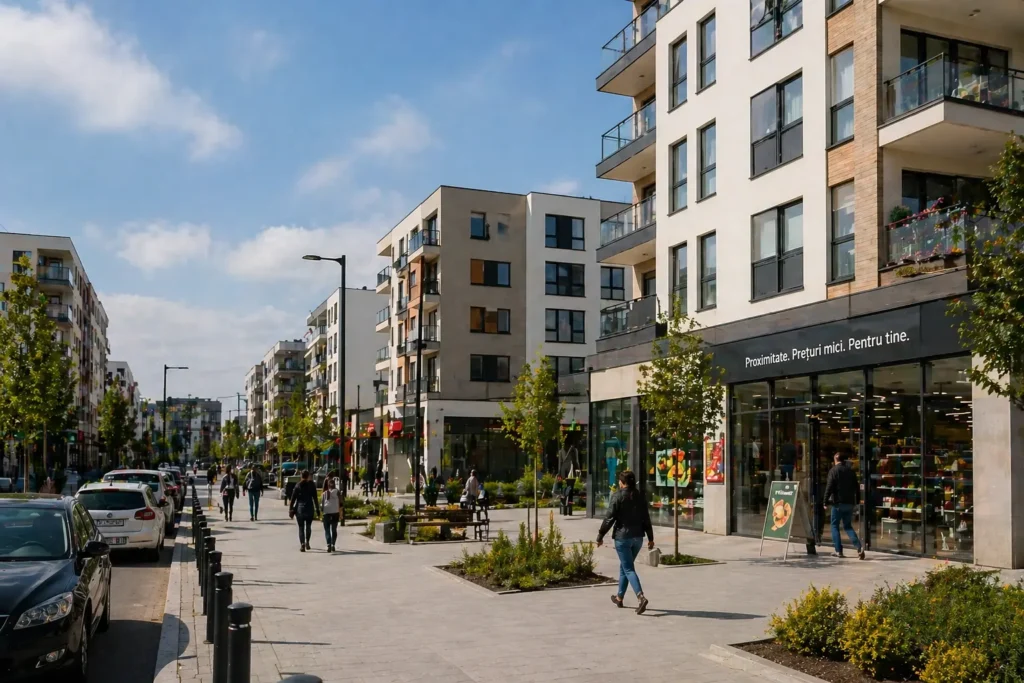
In the context of the accelerated expansion of retail networks, selecting locations in secondary cities becomes a strategic process, based on analysis and speed of execution.
Contrary to general perception, these markets are no longer treated as alternatives to the big cities, but as complementary growth areas, integrated into national coverage strategies.
What defines the “right” location in secondary cities
In secondary cities, a high-performing location is not determined solely by size or visibility, but by its relevance to local consumption habits.
The main elements considered:
Main selection criteria
The selection process is structured around key indicators:
Traffic and accessibility
A constant flow of customers is essential, especially in established residential areas.
Demographics and density
The number of residents nearby and their profile directly influence the store’s performance.
Visibility and positioning
Street corners, intersections or active street frontages provide a competitive advantage.
Space configuration
The flexibility of the layout and the possibility of adapting it to the retailer’s requirements are critical.
Differences from the big cities
Compared with large cities such as Iași, selecting locations in secondary markets involves a different approach:
Speed of execution – a competitive advantage
In a context of accelerated expansion, the ability to quickly identify and secure a location becomes a major differentiator.
Retailers look for:
This dynamic favours partnerships with local consultants, who can accelerate access to relevant opportunities.
Common mistakes in site selection
Even in markets with less competition, choosing the wrong location can affect long-term performance.
Among the most common errors:
The role of advisory in the selection process
In this context, commercial real estate advisory becomes an essential factor in:
4Biz Properties contributes through an approach oriented towards:
Selecting locations in secondary cities is no longer an opportunistic process, but a strategic one, integrated into national expansion plans.
In this context, the difference is made by the ability to combine analysis with speed of execution and to adapt the strategy to the specifics of each local market.